Showing posts with label edwardian. Show all posts

Tuesday, September 10, 2024

M.R. James: Master of the Ghost Story


M. R. James, or Montague Rhodes James, is a name synonymous with classic English ghost stories. Born in 1862, James was a scholar whose background heavily influenced his writing. His professional life was primarily spent in academia, serving as the Provost of King's College, Cambridge, and later Eton College. Despite his notable career in medieval studies and manuscripts, it was his ghost stories that earned him lasting fame.

James' tales are distinct for their atmospheric tension, drawing heavily from his scholarly pursuits. His passion for history, folklore, and ancient manuscripts bleeds into his works, providing rich, detailed backdrops for his supernatural stories. Unlike many horror writers who use overt terror or graphic descriptions, James' approach is more subtle and psychological. His protagonists are often educated men, like himself, who stumble upon something sinister hidden within the mundane world of old books, churches, or artifacts. This blending of the academic with the eerie is what gives James' stories their unique flavor.James believed that a ghost story should be set in a familiar, real-world environment, that the supernatural element should be hinted at rather than shown outright, and that there should always be a sense of ambiguity. Therefore, the settings of James' stories often reflect his own surroundings. Many are set in remote English countryside villages, Gothic churches, or musty libraries—places he knew well. His ability to transform these familiar spaces into sites of terror is a testament to his skill. He was able to make the ordinary extraordinary, hinting that beneath the surface of our day-to-day lives lies something far darker and more mysterious. This approach gave his stories a lingering effect, leaving readers haunted by the possibilities of what might lurk beyond the veil of the everyday.

Unlike many writers of supernatural fiction, James didn't begin his career as a full-time author instead, he wrote ghost stories as a hobby, often reading them out loud to friends suing Christmastime-a tradition that goes back to Victorian times when ghost stories were a popular holiday entertainment.

James' influence on horror fiction is profound. His ghost stories set the standard for many 20th-century writers, and his work continues to inspire contemporary horror. His emphasis on suggestion, atmosphere, and the power of the unseen shaped the genre in significant ways. M. R. James remains a master of the ghost story, his works a timeless reminder that true horror lies not in what we can see, but in what we can barely glimpse.


AI assisted content
Tuesday, August 13, 2024

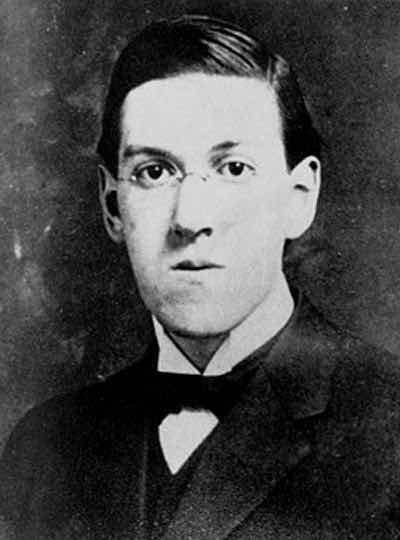
H.P. Lovecraft: The Man Behind the Cosmic Horror


H.P. Lovecraft, often hailed as the father of modern horror, has left a mark on literature, influencing countless authors, filmmakers, and artists. But what is it about Lovecraft that makes his work so enduring? To understand this, we need to delve into his history, education, and the unique inspirations that shaped his writing.

Born on August 20, 1890, in Providence, Rhode Island, Howard Phillips Lovecraft had a childhood marked by tragedy and solitude. His father, Winfield Scott Lovecraft, suffered a mental breakdown and was institutionalized when Lovecraft was just three years old. His mother, Sarah Susan Phillips Lovecraft, who also struggled with her own mental health issues, was deeply protective of him, fostering an environment of isolation.

Lovecraft's formal education was sporadic, but his intellectual curiosity knew no bounds. He was a voracious reader, devouring works of classical literature, mythology, and science. His early exposure to Gothic tales and the works of Edgar Allan Poe left a lasting impression on him, and his fascination with astronomy became another lifelong passion.

Although Lovecraft never completed high school due to health issues, he was largely self-taught, educating himself through extensive reading and writing. His love for the classics, particularly Roman and Greek literature, influenced his writing style, which is characterized by an archaic tone and elaborate prose.

Lovecraft's work was unique and stood out from the other writers of his time for several reasons. Firstly, his creation of a shared mythos, often referred to as the "Cthulhu Mythos," was groundbreaking. This universe, populated by ancient deities like Cthulhu, Nyarlathotep, and Azathoth, has become a cultural phenomenon, influencing not just literature but also games, movies, and even music.

Another aspect that made Lovecraft unique was his ability to blend science and fiction in a way that was ahead of his time. His stories often incorporate elements of astronomy, physics, and biology, reflecting his deep interest in these subjects. This fusion of science with the supernatural helped to create a new genre of horror that explored the terrifying implications of the unknown.

Lovecraft died in relative obscurity in 1937. Despite this, his work has had a lasting impact on popular culture. His influence can be seen in the works of writers like Stephen King, Neil Gaiman, and Clive Barker, and his mythos continues to inspire new generations of creators. His tales remind us that in the vastness of the cosmos, there are mysteries beyond human comprehension—an idea that continues to both fascinate and terrify.


AI assisted content

Aurora: What Happened To The Earth Tour

I saw Aurora with a friend on Thursday Nov 21 at the shrine theater in Los Angeles. The driving around the theater was hectic. However oncev...